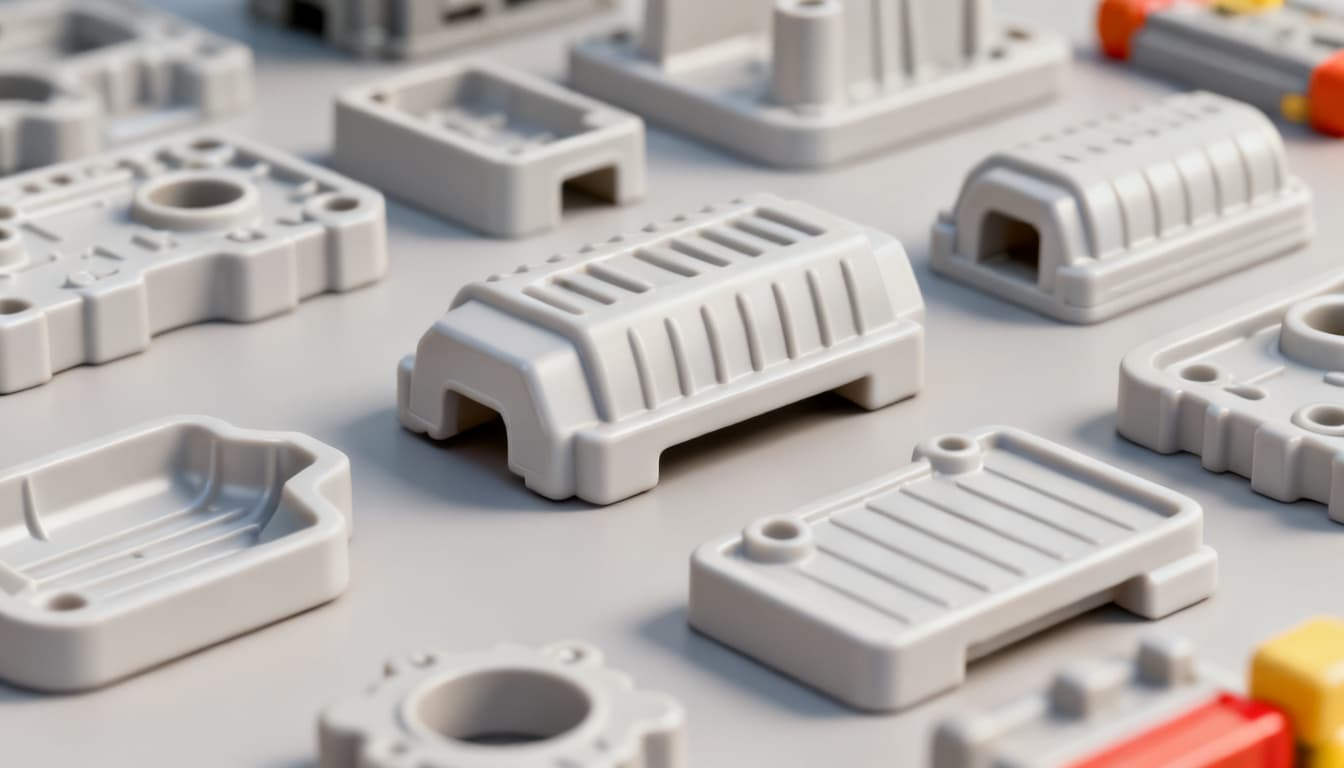
Cost Optimization Strategies for Sourcing Injection Molded Plastic Toy Parts: Supplier Negotiation and Design-for-Manufacturability Hacks
If you're sourcing injection molded plastic toy parts in 2026, you've already felt the squeeze. Resin indexes are volatile. Lead times stretch past 14 weeks on some grades. And the old playbook—send a STEP file to three Chinese molders and pick the lowest quote—is burning procurement teams who disco
If you're sourcing injection molded plastic toy parts in 2026, you've already felt the squeeze. Resin indexes are volatile. Lead times stretch past 14 weeks on some grades. And the old playbook—send a STEP file to three Chinese molders and pick the lowest quote—is burning procurement teams who discover too late that the per-part price didn't include the real costs. This article walks through the cost levers that actually move the needle, from negotiating tooling amortization terms to shaving seconds off cycle time with a wall-thickness tweak. Every strategy here is grounded in what we see daily at PandaMolding: real tooling builds, real production runs, and real conversations with engineers who need toy parts that hit a cost target without compromising safety or appearance.
Why Toy Part Sourcing Costs Are Spiraling in 2026
Toy brands face a unique cost pressure that industrial parts buyers rarely encounter: the retail price point is fixed before engineering even starts. A action figure accessory that costs $0.18 too much per unit can kill the entire SKU. Meanwhile, the supply side is tightening. Engineering-grade resins that balance impact strength with fast cycling—ABS, HIPS, and filled polypropylene grades—have seen price swings of 12–18% year-over-year in some regions. Lead times for mold bases and standard components are stretching as tool shops run at capacity.
What's changed in the last 18 months is that the old assumption—"China is always cheapest"—no longer holds as a blanket rule. A documented case from Northern Plastics showed a U.S.-based toy company cutting lead times by six weeks and saving $8 per unit by switching to a local supplier. That's not an anomaly; it's a signal that total landed cost, not ex-factory price, is the only number that matters.
At the same time, the suppliers who are winning toy contracts in 2026 are the ones who invest in upfront engineering. A Design for Manufacturability review conducted before tooling begins catches wall-thickness inconsistencies, undercut traps, and gate-placement issues that would otherwise trigger change orders after steel is cut. The design stage, as multiple analyses confirm, offers the largest single opportunity for cost avoidance in the entire injection molding lifecycle. Waiting until after the first T1 sample to think about manufacturability is the most expensive mistake a toy engineer can make.
Long-term supplier relationships also stabilize pricing in ways that spot-buying never will. Neway Precision's cost-effectiveness analysis highlights that diversifying material sourcing and establishing multi-year agreements with molders creates financial predictability—something toy brands with seasonal launch cycles desperately need. When your molder knows your annual volume forecast 12 months out, they can reserve machine time, buy resin in bulk, and amortize tooling across a known quantity. That predictability shows up in your piece price.
Key Takeaway: The cost spiral isn't just about resin prices. It's about lead-time uncertainty, fragmented supplier relationships, and the absence of DFM discipline before tooling kickoff. Fix those three things and you've already captured 70% of the available savings.
The Real Cost Drivers Behind Every Injection Molded Toy Part
Most sourcing managers fixate on the piece price. That's understandable—it's the number on the purchase order. But piece price is a derivative of at least six underlying variables, and understanding how they interact is what separates engineers who hit cost targets from those who don't.
A standardized cost model, like the one described in Topworks Plastic Molding's quote preparation framework, breaks the per-part cost into its components: material cost (part weight × resin price per kg), processing cost (machine rate per second × cycle time ÷ number of cavities), scrap allocation, and overhead. When you see the math laid out this way, the negotiation levers become obvious. Cutting cycle time from 22 seconds to 16 seconds—through wall-thickness optimization or cooling-channel redesign—drops processing cost by 27% on that part. That's a far bigger impact than squeezing your supplier for a 3% material discount.
The table below maps each cost driver to the design or sourcing decision that controls it. Use this as a diagnostic before you send your next RFQ.
| Cost Driver | Typical Share of Piece Price | What Controls It | Optimization Lever |
|---|---|---|---|
| Raw material | 35–55% | Resin grade, part weight, regrind percentage | Wall-thickness reduction, material substitution, regrind allowance in spec |
| Cycle time | 20–30% | Wall thickness, cooling design, mold temperature control | Uniform wall design, conformal cooling, optimized gate location via MoldFlow |
| Tooling amortization | 8–15% | Mold complexity, cavity count, tool steel grade | Multi-cavity for high volumes, eliminating side actions, negotiating amortization terms |
| Labor & overhead | 10–18% | Automation level, secondary operations, QC requirements | Automated degating, in-mold labeling vs. post-mold decoration, lights-out production |
| Scrap & rework | 3–8% | Process capability (Cpk), mold maintenance, operator skill | Process validation before production handoff, preventive mold maintenance schedule |
| Logistics & packaging | 5–12% | Shipping mode, part density, nesting efficiency | Stackable/nestable part design, local vs. overseas production split |
Notice that material and cycle time together account for 55–85% of the piece price. That's where your engineering attention should go. A comprehensive cost breakdown from RapidDirect confirms that tooling CapEx and piece price are inextricably linked—a mold built with higher upfront investment in cavitation and cooling efficiency pays back through lower per-unit processing cost, sometimes within the first 50,000 shots.
Tip: When comparing quotes from multiple suppliers, insist that each one break out material cost, processing rate, cycle time assumption, and cavity count. Without this standardization, a lower piece price might simply reflect a supplier who assumed a faster cycle time they can't actually achieve—or worse, one who quoted a lower-grade resin that won't pass toy safety testing.
The complete buyer guide from PlasticMoulds.net reinforces this: a formal DFM analysis, mold flow review, and engineering assessment should precede any final tooling investment decision. Skipping these steps to save two weeks on the front end routinely costs $10,000–$25,000 in tooling rework on the back end.
Supplier Negotiation vs. Design-for-Manufacturability: Which Lever Lowers Your Piece Price Faster?
There's a persistent debate in sourcing circles: should you spend your time negotiating harder with suppliers, or should you invest that time in optimizing the part design before it goes out for quote? The answer depends on where you are in the product development cycle—but the data strongly favors DFM as the higher-leverage activity for most toy programs.
Negotiation can certainly move the needle. Volume commitments, multi-year agreements, and competitive bidding can shave 5–12% off a quoted piece price. But DFM changes—reducing wall thickness, eliminating undercuts, optimizing gate placement—can cut 15–30% from the piece price before you ever pick up the phone. And unlike a negotiated discount, which a supplier may claw back through change orders or quality shortcuts, a DFM-driven cost reduction is baked into the part geometry permanently.
The comparison table below maps the most common cost-reduction tactics against their typical impact, lead time, and risk profile.
| Cost-Reduction Lever | Typical Piece-Price Impact | Time to Implement | Risk / Trade-Off | Best For |
|---|---|---|---|---|
| Volume commitment (annual) | 5–10% reduction | Immediate (negotiation cycle) | Low risk; requires accurate forecast | Established SKUs with stable demand |
| Local vs. overseas sourcing shift | Variable; $2–$8/unit savings documented | 8–16 weeks (qualification) | Medium; logistics complexity changes | Parts with high freight cost relative to piece price |
| Multi-cavity tooling (2→4 cavities) | 25–40% processing cost reduction | 4–8 weeks (tooling modification or new build) | Higher upfront tooling cost; break-even at ~50k units | Annual volumes above 100,000 parts |
| Wall-thickness optimization | 15–30% cycle-time reduction | 2–4 weeks (design iteration + MoldFlow) | Low if structural integrity maintained; requires CAE validation | Any part; highest-impact DFM lever |
| Material substitution (e.g., filled PP for ABS) | 10–25% material cost reduction | 4–8 weeks (testing + certification) | Medium; must re-validate mechanical properties and toy safety | Non-structural toy components, housings |
| Eliminating undercuts / side actions | 10–20% tooling cost reduction | 2–6 weeks (part redesign) | Low to medium; may affect aesthetic features | Complex toy geometries with unnecessary detail |
The $8-per-unit savings from local sourcing cited earlier came from a Northern Plastics case study where a toy brand eliminated air freight and reduced lead time simultaneously. But that's a logistics-driven saving, not a piece-price reduction. The real structural cost improvements come from design-side decisions.
A formal DFM and mold-flow review prevented what would have been a $15,000 tooling mistake on one toy program we consulted on—the original gate location would have created a knit line directly across the character's face, requiring a cosmetic reject rate that made the piece price unworkable. Moving the gate to a less visible location added zero tooling cost and eliminated the defect entirely.
Note: The highest-ROI approach combines both levers. Optimize the part design first (DFM), get quotes on the optimized geometry, then negotiate from a position of strength—your part is now easier to mold, cycles faster, and uses less material. Suppliers will sharpen their pencils when they see a moldable design.
Practical Hacks for Toy Engineers: From Cavity Balancing to Resin Selection
This section is the toolkit. These are the specific, actionable steps that product engineers and sourcing managers can implement on their next toy program—ideally before the design freeze, but many of them work as cost-reduction exercises on existing production parts too.
1. Standardize your quote inputs before you send a single RFQ. The Topworks quote preparation guide makes this point clearly: if you send three suppliers a STEP file with no accompanying spec sheet, you'll get three numbers back that aren't comparable. One supplier assumes a single-cavity prototype mold; another quotes a four-cavity production tool. One assumes ABS; another quotes HIPS. Standardize material grade, expected annual volume, cavity count, surface finish class (SPI A-2, B-1, etc.), and any secondary operations. Only then can you compare quotes apples-to-apples.
2. Run a mold-flow simulation before cutting steel. SEAWIN Industrial's cost analysis emphasizes that optimizing molding parameters using CAE software like MoldFlow catches gate-location problems, weld-line placement, and cooling imbalances before they become physical defects. On a toy part with intricate surface detail—think a dinosaur's scales or a doll's facial features—a poorly placed gate can create visible flow marks that require secondary finishing. A simulation costs $500–$1,500 and routinely prevents five-figure tooling rework.
3. Choose resin with cycle time and toy safety in mind—not just datasheet properties. The table below compares resins commonly specified for toy parts, with an emphasis on the cost-relevant processing characteristics that datasheets don't highlight.
| Resin | Typical Cycle Time (2mm wall) | Relative Material Cost | Toy Safety Notes | Best Application |
|---|---|---|---|---|
| ABS (general purpose) | 18–25s | $$ (mid-range) | Widely accepted; verify phthalate-free grade | Action figures, vehicle bodies, structural housings |
| HIPS (high-impact polystyrene) | 15–22s | $ (low) | Easy to color; lower impact strength than ABS | Building blocks, playset components, low-stress parts |
| PP (polypropylene, unfilled) | 12–18s | $ (low) | Excellent chemical resistance; living hinge capable | Containers, hinged lids, flexible toy components |
| PP (20% talc-filled) | 10–16s | $$ (low-mid) | Stiffer than unfilled; verify filler is toy-safe grade | Structural panels, rigid toy bases |
| PC/ABS blend | 22–30s | $$$ (high) | High impact; check BPA-free if applicable | Premium toy housings, high-durability parts |
| TPE/TPR (overmolding grade) | 20–28s | $$$ (high) | Soft-touch; verify migration limits for mouth-contact toys | Grips, soft overmolds, teething toy components |
The cycle-time differences in this table translate directly to processing cost. Switching from ABS to talc-filled PP on a non-structural toy housing can cut cycle time by 30–40% while reducing material cost. The trade-off is stiffness and surface finish—talc-filled PP won't produce the high-gloss, scratch-resistant surface that ABS delivers. But for an internal bracket or a painted component, that trade-off is almost always worth making.
4. Vet your molder with a structured checklist—not a gut feeling. The 2026 supplier checklist from Custom Plastic Moldings covers the essentials: mold maintenance records, process capability data (Cpk), raw material traceability, and quality system certifications. For toy parts specifically, add ICTI Ethical Toy Program certification to your screening criteria if the supplier will handle assembly or packaging. A molder who can't produce a Cpk report for critical dimensions on your part is a molder who hasn't validated their process—and that means your defect rate is an unknown variable until production starts.
5. Sweat the dimensional details on cosmetic surfaces. Boyan Manufacturing's guide to toy injection molding makes a critical point: even slight deviations in dimensions can alter the overall appearance of toy avatar products. A 0.2mm shift in a character's eye socket or a misaligned parting line across a face changes the toy's perceived quality. The solution isn't tighter tolerances everywhere—that drives up tooling cost—but rather identifying the 3–5 critical cosmetic dimensions and holding those to a tighter spec while relaxing non-visible areas. This selective precision approach balances appearance with cost.
6. Consider a hybrid sourcing model. For toy programs with annual volumes above 200,000 units, splitting production between regions can optimize both cost and agility. Build the tool in China where mold-making labor rates are lower, qualify it with an initial production run, then keep a portion of annual volume with a local molder for replenishment orders that need fast turnaround. This model reduces air-freight dependency while preserving the piece-price advantage of overseas production for the bulk of the run.
Sourcing Injection Molded Toy Parts: The Questions You're Not Asking Your Molder
Most sourcing guides cover the basics. This section addresses the questions that senior engineers and procurement leads actually wrestle with—the ones where a wrong answer costs real money.
Q: How can I get an accurate tooling quote before my toy part design is finalized?
You can't get a binding quote without a frozen design—but you can get a budgetary quote that's useful for planning. Provide a preliminary 3D model along with a clear boundary diagram showing critical dimensions, intended parting line, surface finish requirements, and any areas where texture or engraving is required. Ask the supplier to quote with a ±15% range and to list all assumptions: material grade, cavity count, expected cycle time, and mold base size. Use a standardized input sheet—like the framework described in the PlasticMoulds.net buyer guide—so that quotes from different suppliers are comparable. The key is transparency on assumptions; a supplier who won't share their cycle-time assumption or cavity-count logic is one whose quote will change after you commit.
Q: What's the minimum annual volume that justifies a multi-cavity mold for a small toy part?
As a rule of thumb, annual volumes above 50,000–100,000 parts begin to justify a two- or four-cavity mold through lower piece price. The precise break-even depends on the added tooling cost versus the cycle-time savings. For very small, high-volume toy parts like building blocks or connector pegs, even 20,000 units can justify multi-cavity tooling when the cycle time drops from 30 seconds to 8 seconds per shot. The math is straightforward: if a second cavity adds $4,000 to tooling cost but saves $0.06 per part in processing, the payback comes at 67,000 units. Run that calculation with your supplier's actual numbers—don't rely on generic benchmarks. A detailed CapEx vs. piece-price analysis should be part of every tooling decision.
Q: Should I source toy parts from China or a local injection molder?
China often wins on ex-factory piece price for high volumes with simple logistics—but that advantage erodes when you factor in air freight, inventory carrying costs, and the risk of quality issues discovered 8,000 miles from your distribution center. Local sourcing can reduce lead times by 4–6 weeks and eliminate air-freight surprises, as documented in the Northern Plastics case study where a toy brand saved $8 per unit. A hybrid approach—tooling built in China, with production split between an Asian molder for base volumes and a domestic molder for peak-season replenishment—balances cost and agility. Always compare total landed cost (piece price + freight + duty + inventory carrying cost + quality-inspection cost), not just the number on the supplier's invoice.
Q: How do I negotiate tooling amortization so I'm not locked into one supplier?
Request a separate line item for tooling cost on every quote and purchase order. Agree on a per-part amortization schedule—for example, $0.10 per piece amortized over the first 100,000 units. After the amortization period concludes, the tooling should become your property with an explicit right to transfer it to another molder. Insist on a tooling ownership clause in the supply agreement and require the supplier to maintain a mold maintenance log showing shot count, preventive maintenance dates, and any repairs. Without that log, a mold you "own" may arrive at your next molder in un-runnable condition. The PlasticMoulds.net cost guide covers tooling ownership as a core element of the sourcing strategy—it's not an afterthought; it's a negotiating position you establish before the PO is issued.
Q: What DFM change yields the biggest cost reduction for injection molded toy parts?
Reducing nominal wall thickness to the minimum required for structural integrity—while maintaining uniform walls throughout the part—consistently delivers the largest impact. It cuts cycle time (thinner walls cool faster), reduces material usage, and decreases cooling demands on the mold. A close second is eliminating undercuts that require side actions or lifters. Every side action adds $2,000–$6,000 to tooling cost and increases cycle time by 2–5 seconds per shot. On a million-unit production run, those seconds add up to real money. SWCPU's cost-reduction analysis confirms that design-stage changes cost far less than adjustments after tooling begins—so run the DFM review early, when changing a wall thickness is a CAD edit rather than a mold modification.
Q: How can I verify a supplier's quality system for toy safety without an on-site audit?
Start with documentation: ask for ISO 9001 certification and, if the supplier handles assembly or packaging, ICTI Ethical Toy Program certification. Request a sample production run with a full dimensional report (FAI) and material certification tracing the resin batch to the supplier's lot number. Use a third-party inspection service—SGS, Bureau Veritas, or Intertek—for the first article inspection; this costs $500–$1,500 and is the closest thing to an on-site audit without traveling. A structured 2026 supplier checklist that covers mold maintenance records, process capability (Cpk) data for critical dimensions, and raw material traceability will surface red flags before you commit to a production run. If a supplier hesitates to share Cpk data or won't disclose their resin source, treat that as a disqualifier—not a negotiation point.
Conclusion. Cost optimization for injection molded toy parts isn't a single negotiation tactic or a one-time DFM review. It's a discipline that runs from the earliest concept sketches through to production transfer and tooling ownership. The engineers and buyers who consistently hit cost targets are the ones who standardize their quote inputs, run mold-flow simulations before cutting steel, select resins for cycle time as much as for mechanical properties, and negotiate tooling amortization terms that preserve their freedom to move. At PandaMolding, we've seen these strategies reduce total program cost by 18–35% on toy parts ranging from building blocks to articulated action figures. The common thread: treat cost as a design parameter, not an outcome. Contact our team to discuss your next toy project—we'll help you apply these strategies from day one.