Innovative Techniques in Plastic Injection: Enhancing Design for Optimal Performance
In the ever-evolving field of plastic injection molding, achieving optimal performance in design is paramount. Engineers face the challenge of balancing efficiency, quality, and cost-effectiveness. This article delves into innovative techniques that enhance design while maintaining stringent industr
Innovative Techniques in Plastic Injection: Enhancing Design for Optimal Performance
In the ever-evolving field of plastic injection molding, achieving optimal performance in design is paramount. Engineers face the challenge of balancing efficiency, quality, and cost-effectiveness. This article delves into innovative techniques that enhance design while maintaining stringent industry standards.
Material Selection: The Foundation of Performance
Understanding Material Properties
Choosing the right material is crucial. Common options include ABS, PP, PC, PA66, and TPE. Each has distinct properties affecting performance, such as tensile strength, impact resistance, and thermal stability.
| Material | Tensile Strength (MPa) | Impact Resistance (J/m) | Melt Temperature (°C) |
|---|---|---|---|
| ABS | 40 | 300 | 220 |
| PP | 35 | 100 | 230 |
| PC | 65 | 600 | 250 |
| PA66 | 80 | 150 | 260 |
| TPE | 25 | 500 | 200 |
Trade-offs in Material Selection
While PC offers superior strength and impact resistance, it is more expensive and requires higher processing temperatures, increasing energy costs. Conversely, PP is cost-effective but may not meet high-performance requirements.
Design Considerations: Balancing Form and Function
Wall Thickness and Uniformity
Maintaining a consistent wall thickness of 1-3mm is critical to prevent defects such as warping and sink marks. Thicker walls increase cycle time and material costs, while thinner walls may compromise structural integrity.
Incorporating Draft Angles
Draft angles of 0.5-2° facilitate smooth ejection from the mold without damaging the part. Insufficient draft can lead to ejection issues and increased wear on the mold surfaces.
Process Optimization: Enhancing Efficiency
Injection Pressure and Speed
Properly setting injection pressure (typically 50-150 MPa) and speed is vital. High pressure reduces cycle time but risks flash, while low pressure may result in short shots.
Cycle Time Reduction
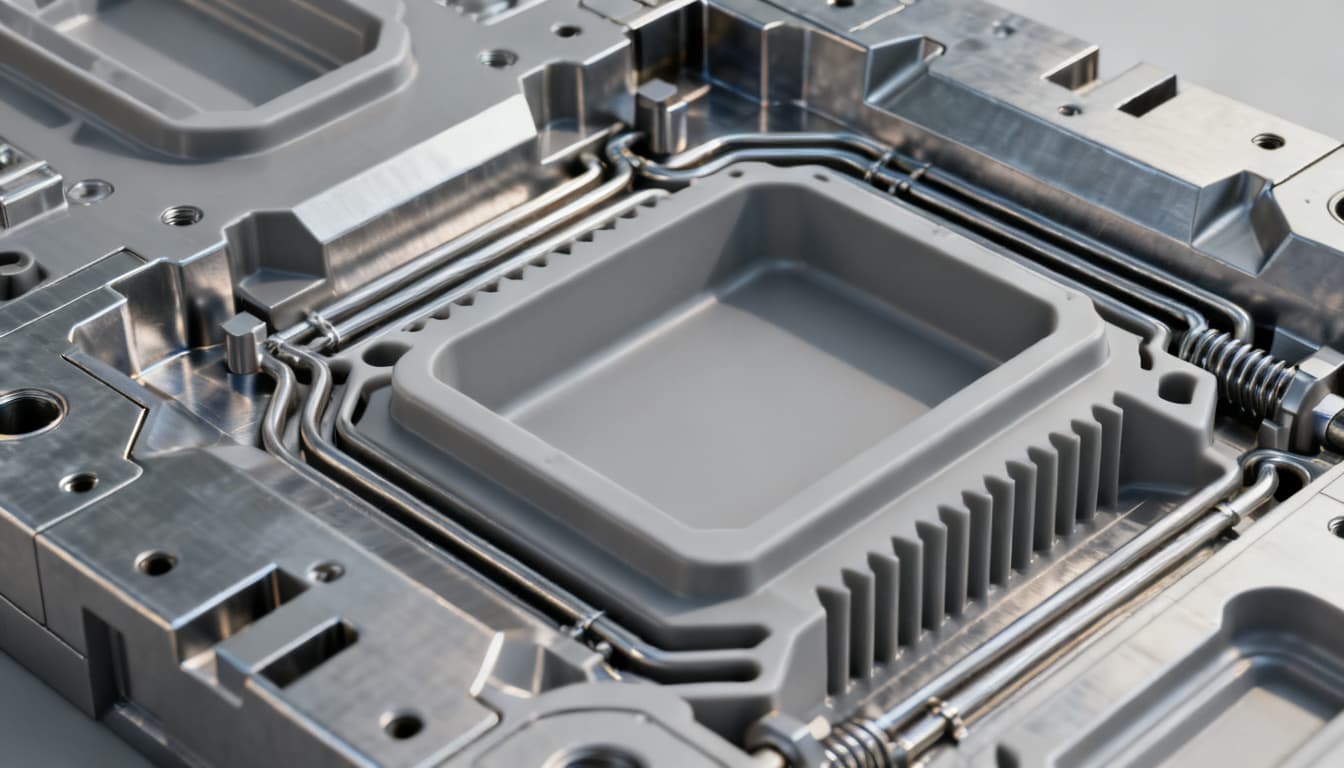
Cycle time is influenced by cooling efficiency. Using conformal cooling channels can reduce cooling time by up to 30%, improving overall productivity.
Defect Prevention: Achieving Quality Assurance
Common Defects and Solutions
Defects such as warping, sink marks, and voids are common. Warping can be minimized by ensuring uniform cooling and proper material selection. Sink marks often occur due to excessive wall thickness and can be mitigated by adjusting process parameters.
| Defect | Cause | Solution |
|---|---|---|
| Warping | Uneven cooling | Uniform cooling channels |
| Sink Marks | Thick walls | Optimize wall thickness |
| Voids | Insufficient packing pressure | Increase packing pressure |
Advanced Techniques: Pushing the Boundaries
Gas-Assisted Injection Molding
This technique reduces part weight and material usage by introducing gas into the mold cavity. It creates hollow sections in thick parts, maintaining strength while reducing weight.
Micro Injection Molding
For small, complex parts, micro injection molding offers precision with tolerances as low as ±0.005mm. It is ideal for medical and electronic components where accuracy is crucial.
Checklist for Optimal Injection Molding Design
- Select the appropriate material based on performance requirements.
- Ensure consistent wall thickness and adequate draft angles.
- Optimize injection pressure, speed, and cycle time.
- Implement defect prevention strategies.
- Explore advanced molding techniques for complex designs.
Practical Tip: Regularly review and update your design and process parameters based on feedback and performance data to continually enhance product quality.
Conclusion: Key Takeaways
Innovative techniques in plastic injection molding are essential for enhancing design and optimizing performance. By carefully selecting materials, adhering to design principles, and utilizing advanced processes, engineers can achieve high-quality, cost-effective results. For personalized advice and a tailored solution to your injection molding needs, get a free quote from Panda Molding.