Respiratory Device Filter Housing Molding
At Pandamolding, our medical-grade injection molding expertise ensures precision and biocompatibility for respiratory device filter housings. We produce high-clarity, leak-proof components that meet strict ISO 13485 standards, supporting reliable filtration in ventilators and breathing circuits. Trust our advanced molding for critical respiratory device filter housing molding that safeguards patient health.
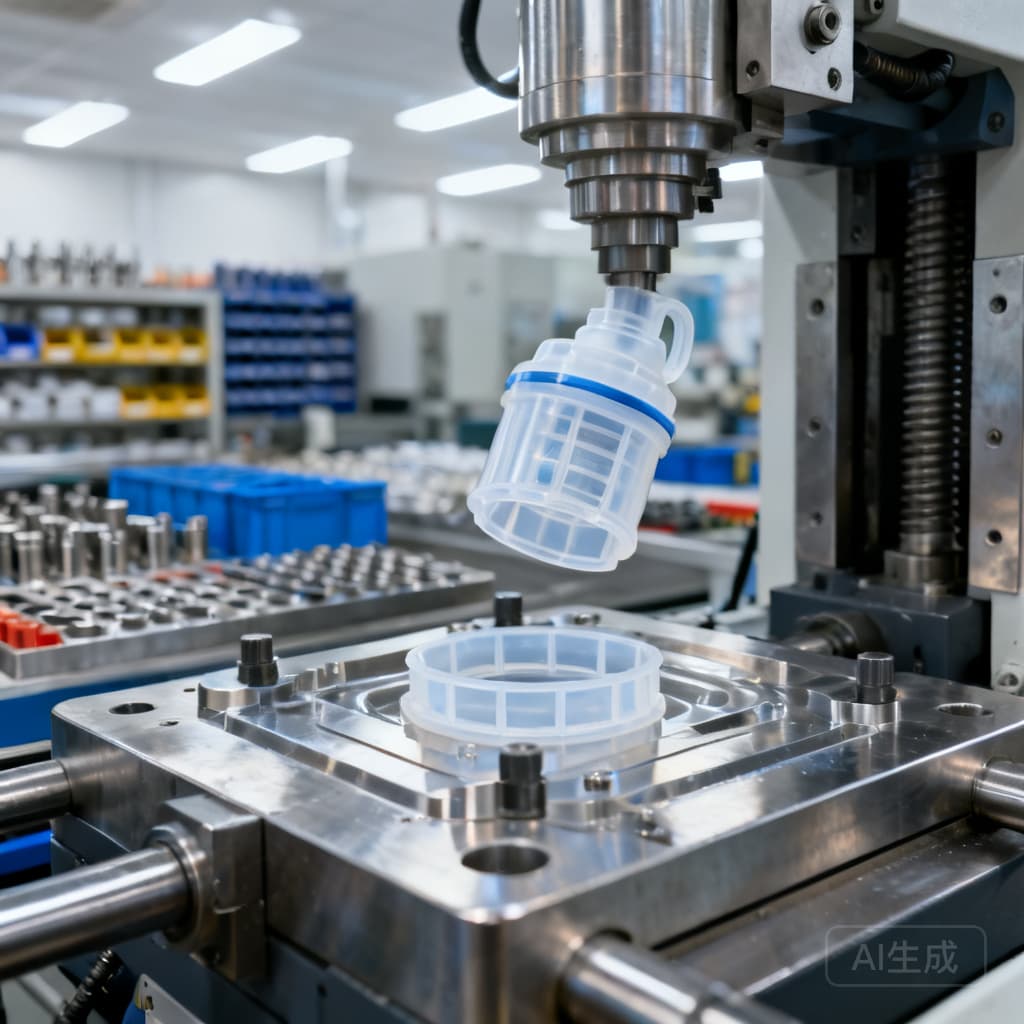
Overview
When filter housing defects—warp, flash, or cracking—trigger recalls like the PALL Medical Breathing Circuit Filter Class 2 recall, patient safety is compromised. Panda Molding's Respiratory Device Filter Housing Molding eliminates these risks with scientific injection molding, ISO 9001 quality, and medical-grade precision that keeps your respiratory devices compliant and reliable.
", "description": "Respiratory Device Filter Housing Molding — Custom Injection Molding by Panda Molding
\nMedical filter housings for ventilators, anesthesia circuits, and respiratory therapy must maintain absolute seal integrity and dimensional stability. Recent FDA early alerts and recalls, such as the PALL Medical Breathing Circuit Filter Class 2 recall and advisories on ICU ventilation filters reported May 2026, underscore how molding defects like flash, short shots, or stress cracks can lead to bypass leakage and loss of filtration efficiency. Panda Molding's Respiratory Device Filter Housing Molding service applies scientific injection molding with tight process control, medical-grade materials, and cleanroom production to deliver housings that meet USP Class VI, ISO 10993, and your exact dimensional requirements—without the field failures that put patients at risk.
\n\nService Capabilities
\n- \n
- Tolerances as tight as ±0.05 mm: Critical sealing surfaces and snap-fit features held to precision limits for consistent assembly and airflow performance. \n
- Multi-cavity tooling with hot-runner systems: Valve-gated hot runners eliminate gate vestige and balance fill across 2–16 cavities, reducing cycle time and part variation. \n
- Cleanroom molding (ISO Class 8): Molding and post-molding handling in controlled environments to prevent particulate contamination on filter housing components. \n
- Medical-grade material selection: Polycarbonate, polypropylene, polysulfone, and PEI grades that comply with USP Class VI and ISO 10993 biocompatibility standards as required for medical devices. \n
- In-house tooling design with conformal cooling: Optimized cooling channels reduce shrinkage variation and cycle time by up to 20%, ensuring repeatable part geometry shot after shot. \n
Industries & Applications
\nRespiratory Device Filter Housing Molding supports high-stakes medical applications where filtration integrity is non-negotiable. In anesthesia breathing circuits and intensive care ventilators, the housing must maintain a hermetic seal while withstanding repeated pressure pulses; any flash or sink mark becomes a leak path. Diagnostic spirometry filters and oxygen concentrator housings demand smooth internal flow paths to avoid turbulence that skews readings. Medical filtration devices require precision plastic components that maintain airflow performance, filtration efficiency, and device reliability. Our molding process achieves the tight dimensional control on critical features that high-volume respiratory SKUs demand, from nebulizer housings to large manifold assemblies. The same rigor applies to laboratory filtration modules and custom housings for healthcare air filtration, where consistent quality across global production sites is mandatory.
\n\nOur Injection Molding Process
\n- \n
- Material preparation and drying: Medical resins are dried to <0.02% moisture content using desiccant dryers to prevent hydrolysis and ensure stable melt viscosity, critical for polycarbonate and polysulfone housings. \n
- Scientific molding setup: Melt temperature, injection velocity, and packing pressure are profiled for each plastic part using in-mold sensors. For polycarbonate filter housings, melt temperatures of 280–310°C and injection pressures of 80–120 MPa are typical, with gate freeze-off verified to avoid sink marks. \n
- Precision tooling and runner design: Multi-cavity molds employ valve-gated hot runners to independently control gate opening, eliminating stringing and ensuring balanced filling. Runner sizing and gate location are optimized via mold flow simulation to minimize weld lines near sealing surfaces. \n
- Automated demolding and inspection: Robots extract parts with controlled ejection to prevent distortion. In-line vision systems check for flash, short shots, and dimensional drift, enabling real-time process adjustment and reducing scrap. \n
Quality Assurance
\nEvery Respiratory Device Filter Housing undergoes a multi-stage quality regimen aligned with ISO 9001 and medical device expectations. First-article inspection uses CMM and optical measurement to verify all critical dimensions against the 3D model. Material certifications for each lot confirm USP Class VI and ISO 10993 compliance as detailed in medical injection molding standards. Process capability studies (Cpk ≥ 1.33) are conducted on key characteristics like sealing surface flatness and snap-fit engagement. Functional tests include pressure decay to detect micro-leaks and airflow resistance measurement to confirm filtration performance. Cleanroom production and RoHS compliance further ensure that the injection mold output meets both regulatory and end-user safety requirements as outlined by industry benchmarks.
\n\nFrequently Asked Questions
\n- \n
- Q: What materials are compatible with Respiratory Device Filter Housing Molding? \n
- A: We process medical-grade thermoplastics including polycarbonate (PC), polypropylene (PP), polysulfone (PSU), polyetherimide (PEI), and cyclic olefin copolymer (COC). All grades meet USP Class VI and ISO 10993 for biocompatibility. Material selection is guided by sterilization method (autoclave, EtO, gamma), chemical resistance, and mechanical load requirements of the filter housing. \n
- Q: What is the typical lead time? \n
- A: Prototype tooling (single-cavity) can be completed in 4–6 weeks, with first-article samples shipped for approval. Production tooling for multi-cavity molds typically requires 6–10 weeks, depending on complexity and cavity count. Bridge tooling options are available for accelerated clinical builds. \n
- Q: What are the MOQ requirements? \n
- A: For prototyping and design validation, we accept orders as low as 100 parts. High-volume production runs typically start at 5,000 pieces per SKU to leverage multi-cavity efficiency and amortize tooling costs. We work with you to scale from pilot to full production seamlessly. \n
Request a Free Quote
\nReady to eliminate molding defects from your respiratory filter housings? Upload your CAD files and drawings for a free, no-obligation DFM review. Our engineering team will assess part geometry, material selection, and tooling strategy, and return a detailed quote with lead times—often within 24 hours. Contact Panda Molding today to start your Respiratory Device Filter Housing Molding project with confidence.
\n\nReferences & Further Reading
\n- \n
- FDA Medical Device Recalls and Early Alerts \n
- FDA Recall Event ID 68424 \n
- Respiratory Therapy Recalls & Advisories (May 2026) \n
- Class 2 Device Recall PALL Medical Breathing Circuit Filter \n
- Superior Felt & Filtration – Plastic Injection Molding for Medical \n
- KS Group – Injection Molding vs. Alternative Methods \n
- BRT USA – When Thermoforming Beats Injection Molding for Large Housings \n
- Plastikos – Respiratory Custom Injection Molding \n
- Extreme Molding – Medical Injection Molding with FDA and USP Class VI Silicones \n
- GVS Healthcare Air Filtration Product Collection \n
- Fictiv – Medical Device Injection Molding Guide \n
- PMC Plastics – Meeting Medical Plastic Standards \n