Two-Shot Dual Material Enclosure Molding
Discover the power of precision Two-Shot Dual Material Enclosure Molding for consumer electronics and appliances. Our advanced injection molding process seamlessly combines rigid and soft materials in a single cycle, creating durable, ergonomic, and visually striking enclosures that elevate product performance and brand identity.
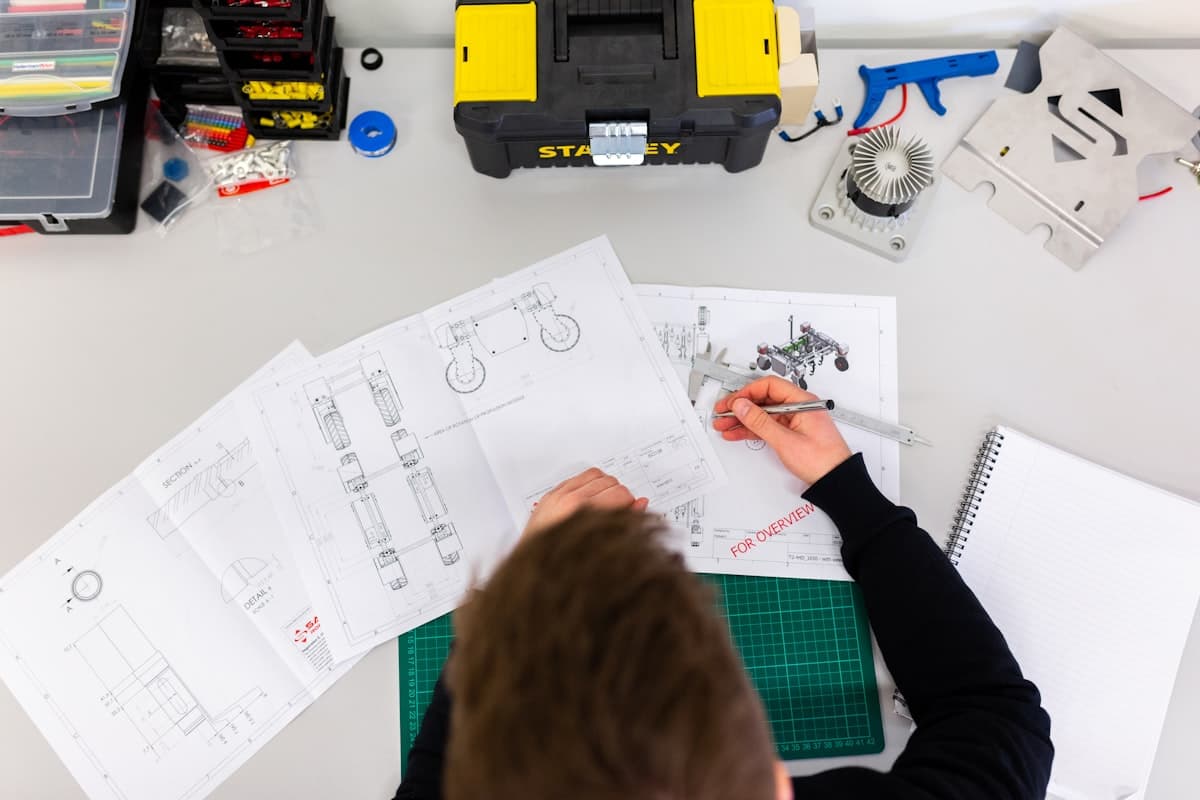
Overview
Consumer electronics demand enclosures that combine rigid structure with soft-touch seals without post-molding assembly. Panda Molding’s Two-Shot Dual Material Enclosure Molding eliminates warp, flash, and delamination risks by bonding materials at the molecular level in a single cycle, reducing per-part costs and ensuring IP-rated protection for high-volume production.
", "description": "Two-Shot Dual Material Enclosure Molding — Custom Injection Molding by Panda Molding
\nMulti-material enclosures in consumer products frequently suffer from warp, flash, short shots, and interface delamination — defects that can scrap entire production runs. Common injection molding defects like warpage and knit lines, combined with mistakes in process control, lead to costly rework. In two-shot molding, interface failure between substrate and overmold can render an entire lot useless. Panda Molding’s Two-Shot Dual Material Enclosure Molding service addresses these pain points with precision tooling and process control, delivering enclosures where rigid and soft materials are chemically bonded in one continuous cycle. Our ISO9001-certified facility uses advanced rotating-platen technology to eliminate secondary assembly, reduce cycle-time overruns, and produce defect-free parts with consistent IP67/68 sealing.
\n\nService Capabilities
\n- \n
- Material Pairings: PC/TPE, ABS/TPU, PA/TPE, and other engineering combinations; we validate chemical compatibility to prevent delamination at the interface. \n
- Precision Tooling: Multi-cavity two-shot molds with rotating platen or core-back design, achieving tolerances as tight as ±0.05 mm on critical sealing surfaces. \n
- Gate & Weld Line Control: Optimized gate placement and melt delivery minimize knit lines in high-stress areas; injection speed increased 15–25% and mold temperature raised 10°C to improve fusion. \n
- Shrinkage Compensation: Differential shrinkage between substrate and overmold is managed through mold design and packing pressure profiles, avoiding warpage in the final plastic part. \n
- Cycle Time Efficiency: Continuous two-step injection in a single tool eliminates handling; typical cycle times are 30–45 seconds for a medium-sized enclosure, reducing per-part cost. \n
Industries & Applications
\nTwo-Shot Dual Material Enclosure Molding excels where a rigid housing must integrate soft-touch grips, water-resistant seals, or impact-absorbing bumpers without manual assembly. Consumer wearables and smartphone cases benefit from the permanent molecular bond that creates a water-resistant seal critical for IP67/IP68 protection. Medical device enclosures require biocompatible TPE over PC for ergonomic, sealed interfaces that withstand repeated sterilization. Automotive interior controls use two-shot molding for soft-touch buttons with backlit symbols, eliminating adhesive failures. Industrial handhelds combine a rigid frame with a shock-absorbing overmold, reducing drop failures. In every case, the process delivers a single, robust part straight from the injection mold, cutting assembly time and improving reliability.
\n\nMaterial & Process Comparison: Failure Boundaries
\n| Process | Bond Mechanism | Delamination Risk | Cost per Part (500k/yr) | Typical Cycle Time | Best For |
|---|---|---|---|---|---|
| Two-Shot Molding | \nMolecular bond during melt phase | \nVery low; interface failure mitigated by controlled melt temps | \n$0.38 less than manual insert process[1] | \n30–45 sec | \nHigh-volume consumer enclosures needing IP67 seal | \n
| Overmolding (separate steps) | \nMechanical interlock or adhesive | \nModerate; may fail under extreme stress[2] | \nHigher labor & handling cost | \n45–70 sec (cumulative) | \nLower volumes, prototyping | \n
| Insert Molding (manual) | \nMechanical encapsulation | \nHigh if insert shifts; knit lines around insert | \nHighest per part | \n50–90 sec | \nMetal-to-plastic transitions | \n
| Two-Shot with Core-Back | \nSame as two-shot, different mold action | \nVery low; precise cavity separation | \nCompetitive, higher hourly rate but lower total cost | \n25–40 sec | \nParts with internal seals or complex geometries | \n
[1] MoldMinds cost comparison; [2] YG Cases bond analysis.
\n\nOur Injection Molding Process
\n- \n
- Material Selection & Rheology: We analyze melt flow, shrinkage, and adhesion between chosen resins to ensure a robust chemical bond and uniform cavity fill. \n
- Two-Shot Mold Design: The tool is built with a rotating platen or core-back mechanism, precise alignment features, and independent thermal control for each cavity. Specialized machines with multiple injection units handle the dual-material process. \n
- First Shot Injection: The rigid substrate (e.g., PC) is injected into the first cavity, cooled to a stable skin while the core remains hot, then the mold indexes to the second station. \n
- Second Shot Overmold & Fusion: The soft material (TPE/TPU) is injected directly onto the substrate, integrating multiple materials directly in the mold. Melt temperature and pressure are tightly controlled to achieve a permanent bond without flash. The finished part cools and is ejected. \n
Quality Assurance
\nEvery Two-Shot Dual Material Enclosure Molding project follows our ISO9001 quality framework. Dimensional inspection uses CMM and vision systems to verify tolerances, especially at the interface. Material bond integrity is tested via pull-off and peel tests per ASTM D6862. Surface finish is controlled to VDI 3400 standards, and functional IPX7 water-ingress tests are performed on sealed enclosures. Our mold standards align with industry references such as KAM Plastics mold standards for two-shot tooling. All materials comply with RoHS, and we provide full FAI reports and process capability data.
\n\nFrequently Asked Questions
\n- \n
- Q: What materials are compatible with Two-Shot Dual Material Enclosure Molding? \n
- A: Common pairings include PC with TPE or TPU, ABS with TPU, and nylon with TPE. The key is chemical affinity and matched shrinkage to avoid interface stress. We evaluate your functional requirements—such as soft-touch feel, chemical resistance, or sealing—and recommend a validated combination. \n
- Q: What is the typical lead time? \n
- A: A two-shot mold typically requires 6 to 10 weeks from finalized 3D data to T1 samples, compared to 4–6 weeks for a single-shot tool. Prototype tools can be delivered in 4–5 weeks. Production ramp-up adds 2–3 weeks after approval. \n
- Q: What are the MOQ requirements? \n
- A: For prototyping, we accept orders as low as 100 pieces. Production volumes typically start at 5,000 parts to amortize tooling costs efficiently, but we work with startups and can accommodate lower quantities with shared family molds or bridge tooling. \n
Request a Free Quote
\nReady to eliminate assembly steps and interface failures? Upload your 3D CAD and part requirements for a free DFM review and quotation. Our engineering team responds within 24 hours with design feedback, material recommendations, and competitive pricing for your Two-Shot Dual Material Enclosure Molding project.
\n\nReferences & Further Reading
\n- \n
- Injection Molding 101: 30 Common Defects & Solutions Guide \n
- 22 Injection Molding Defects and Mistakes: Causes & Solutions \n
- Mitigating Interface Failures And Delamination In Multi-Material Injection Molding \n
- 16 Common Injection Molding Defects: Causes & Solutions \n
- Two-Color Injection Molding: Complete Process Guide \n
- 2 Shot Injection Molding: Advantages, Process, and Overmolding Comparison \n
- Overmolding vs Insert Molding vs Two-Shot Molding: Complete Comparison \n
- Two-Shot Injection Molding vs. Overmolding: Which Process Fits Your Program? \n
- Two Shot Molding Design Guide: Technical Specifications for Engineers \n
- Two-Shot Injection Molding: A Comprehensive Guide to Multi-Material Manufacturing \n
- KAM Plastics Corp. Mold Standards \n
- Two Shot Injection Molding: The Complete Guide to Dual-Material Manufacturing \n