Under-the-Hood Automotive Component Molding
Panda Molding specializes in high-performance under-the-hood automotive component molding, delivering heat-resistant, precision-engineered parts for engine covers, air intake manifolds, and fluid reservoirs. Our advanced injection molding ensures tight tolerances and long-term durability in harsh thermal and chemical environments, meeting stringent automotive standards for reliability and safety.
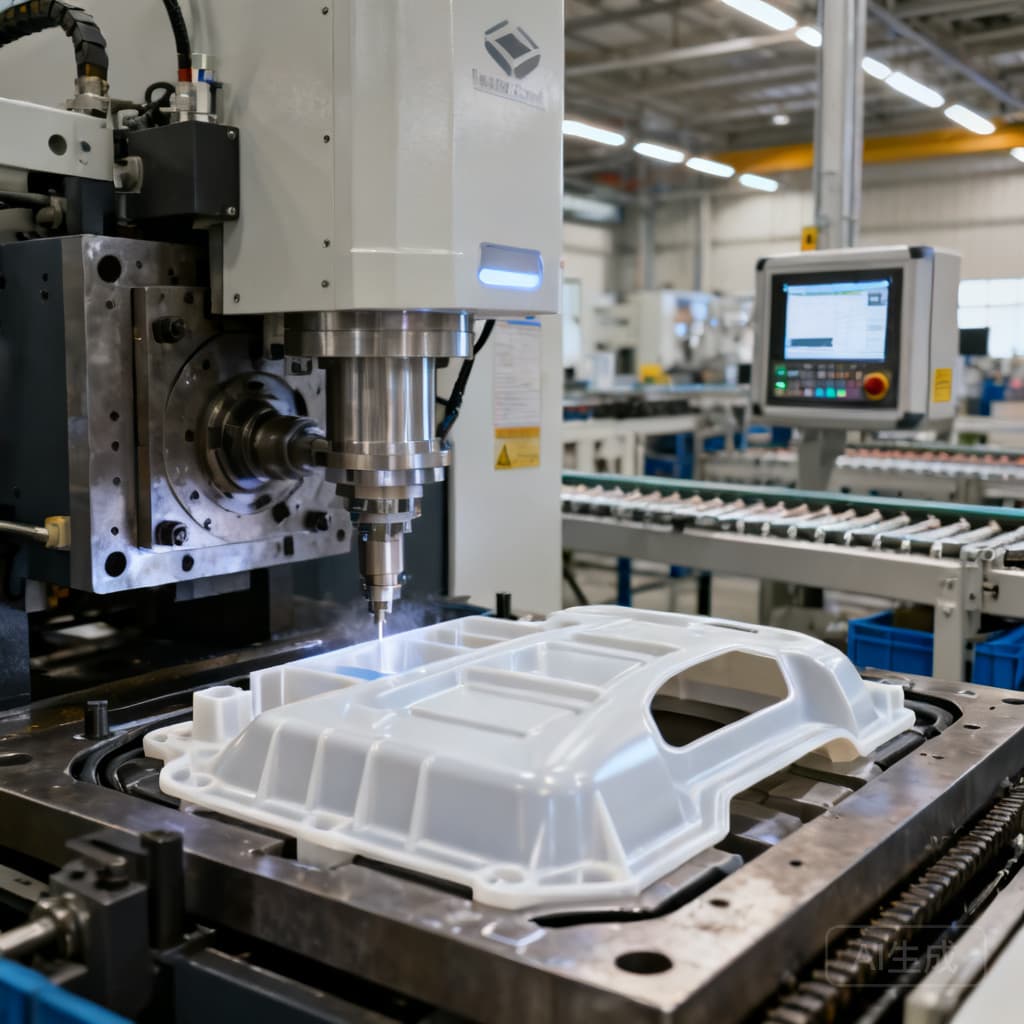
Overview
Under-the-hood automotive components must survive extreme heat, chemical attack, and vibration without warping or flashing. Panda Molding’s Under-the-Hood Automotive Component Molding service delivers precision injection molded parts with tight tolerances, robust material selection, and IATF-aligned process control, ensuring your engine bay parts meet the toughest performance demands.
", "description": "Under-the-Hood Automotive Component Molding — Custom Injection Molding by Panda Molding
Under-the-Hood Automotive Component Molding from Panda Molding addresses the critical need for plastic parts that can withstand continuous exposure to high temperatures, automotive fluids, and mechanical stress. From engine covers and air intake manifolds to cooling system housings and fuel system connectors, our injection molding service combines engineering-grade thermoplastics with precision tooling to deliver components that resist warpage, flash, and cycle-time overruns. With tolerances as tight as ±0.025mm achievable for tight applications (Yushin America), we ensure every part meets stringent automotive requirements. Hundreds of plastic resins are compatible, enabling selection of materials optimized for chemical resistance, heat deflection, and long-term durability.
Service Capabilities
- Material Selection: Hundreds of engineering thermoplastics, TPEs, and specialty compounds, including PA66, PPS, PPA, and glass-filled PP, optimized for under-hood heat and chemical resistance (Yushin America).
- Precision Tolerances: Achievable tolerances of ±0.05mm for critical features, with process capability studies ensuring CpK ≥ 1.33 for high-volume production.
- Mold Flow Simulation: Advanced mold flow analysis to optimize gate location, runner sizing, and cooling channel layout, minimizing warpage and sink marks.
- Multi-Cavity Tooling: Family molds and hot runner systems for balanced filling and reduced cycle time, supporting high-volume under-hood component production.
- Secondary Operations: In-house ultrasonic welding, heat staking, and leak testing for complete under-hood assemblies, ensuring functional integrity.
Industries & Applications
Under-the-hood automotive components demand materials that survive heat deflection temperatures above 200°C and resist oils, coolants, and fuels (Moldie). Typical parts include engine covers, air intake systems, cooling system components, fuel system components, brackets, housings, and electrical connectors (Zhongde). In one EV project, 23 different injection molded components per vehicle were required (ZetarMold). Polypropylene (PP) accounts for roughly 40% of all automotive plastics due to its low cost and chemical resistance, but under-hood parts often need high-performance nylons or PPS to handle continuous 150°C operation (ZetarMold). Panda Molding’s Under-the-Hood Automotive Component Molding service ensures each plastic part meets these exacting thermal and mechanical demands, from prototype to mass production.
Our Injection Molding Process
- Material Preparation & Drying: Engineering resins are dried to precise moisture levels (e.g., <0.02% for PA66) to prevent hydrolysis and splay during injection.
- Mold Setup & Clamping: Tools are mounted and heated to optimal temperature, with clamping force calculated to prevent flash at injection pressures up to 2,000 bar. We follow injection mold specifications and plastic mold design guidelines (Upmold) for runner design, ejection system, and slide/lifter integration.
- Injection & Packing: Melt temperature is controlled within ±2°C, and holding pressure is profiled to compensate for shrinkage, ensuring dimensional stability across all cavities.
- Cooling & Ejection: Conformal cooling channels minimize cycle time while maintaining uniform part temperature; draft angles per industry standards allow clean ejection without distortion.
Quality Assurance
All Under-the-Hood Automotive Component Molding projects are managed under our ISO9001-certified quality system. Dimensional inspection uses CMM and vision systems to verify tolerances down to ±0.05mm. Material certification includes MFI, DSC, and tensile testing per ASTM standards. Surface finish is controlled to VDI 3400 specifications, and functional tests—such as thermal cycling, burst pressure, and leak decay—validate real-world performance. RoHS compliance is maintained for all raw materials, and full PPAP documentation is available for production programs.
Frequently Asked Questions
- Q: What materials are compatible with Under-the-Hood Automotive Component Molding?
- A: We process a wide range of engineering thermoplastics including PA66, PA6, PPA, PPS, PBT, and glass-fiber-reinforced PP. Material selection is driven by the part’s exposure to heat, chemicals, and mechanical load, with options offering heat deflection temperatures above 200°C and excellent resistance to oil, coolant, and fuel.
- Q: What is the typical lead time?
- A: Prototype tooling can be delivered in 3–4 weeks, with first-article parts shipped within 2 weeks after mold approval. Production molds typically require 6–8 weeks, and high-volume production can commence 2–3 weeks after final sample sign-off. Accelerated schedules are available for urgent programs.
- Q: What are the MOQ requirements?
- A: We support low-volume prototype runs starting at 100 parts using single-cavity or family molds. For cost-optimized production, MOQs typically begin at 5,000 parts per year, though we can accommodate smaller volumes through shared tooling strategies. Our team will recommend the most economical approach based on your annual demand forecast.
Request a Free Quote
Ready to eliminate warpage, flash, and cycle-time overruns in your under-hood components? Upload your CAD files or 2D drawings for a free DFM review and competitive quote. Our engineering team will respond with a detailed mold flow analysis and production plan within 48 hours. Contact Panda Molding today and experience precision Under-the-Hood Automotive Component Molding that meets the toughest automotive standards.
References & Further Reading
- Advantages and Disadvantages of Injection Molding — Yushin America
- Benefits Of Plastic Injection Molding In Automotive — Seaskymedical
- Injection Molding Automotive Parts: Complete Guide [2026] — ZetarMold
- Driving Success in Automotive Part Manufacturing — Zhongde
- Injection Mold Specifications & Plastic Mold Design Guideline — Upmold
- Automotive Injection Molding: Part Design & IATF Standard — Moldie