Water Meter Housing Injection Molding
Discover precision water meter housing injection molding engineered for utility durability. Our advanced process delivers high-strength, leak-resistant enclosures that protect metering components in harsh environments, ensuring accurate readings and long service life for municipal and industrial water systems.
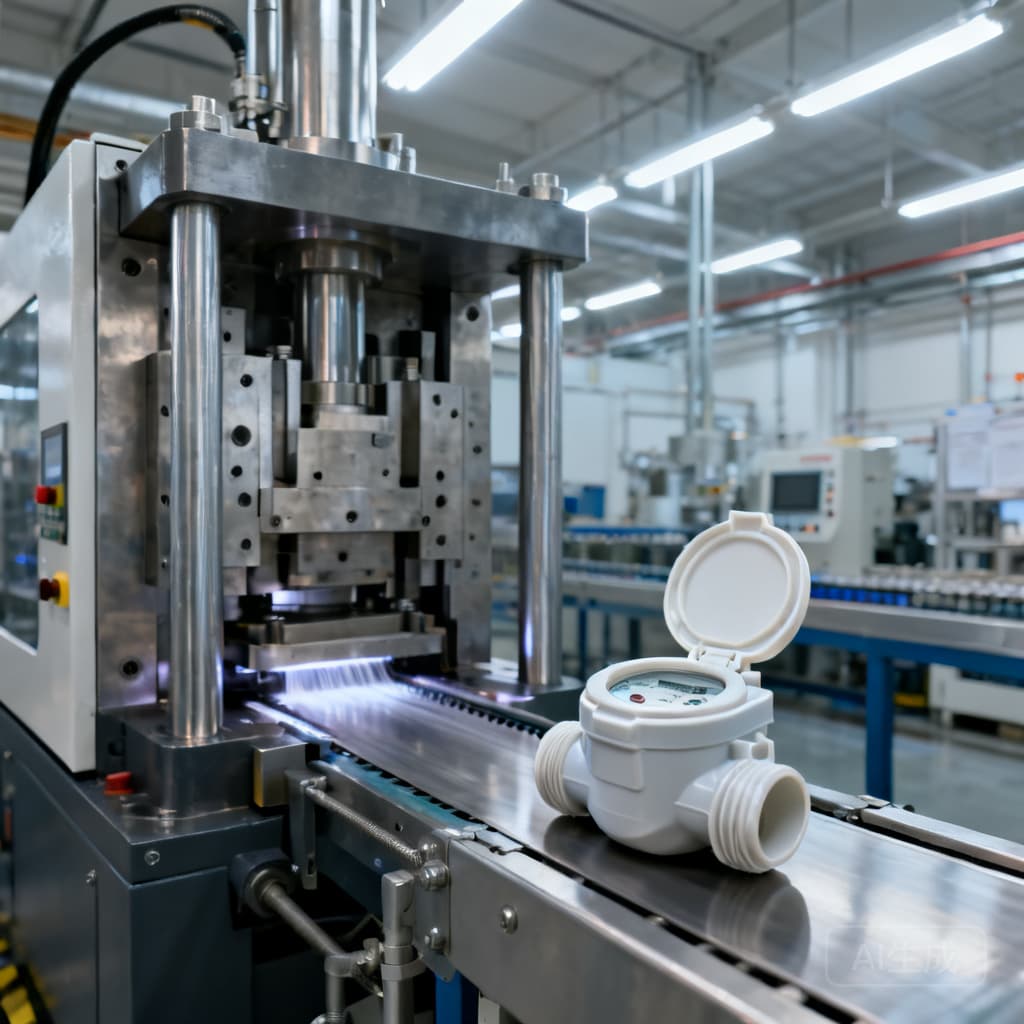
Overview
Water meter housings demand precision injection molding to prevent leaks, warpage, and premature failure. Panda Molding's ISO9001-certified Water Meter Housing Injection Molding service delivers tight-tolerance, durable parts from engineering-grade resins, backed by DFM analysis and rigorous quality control. Request a quote today.
", "description": "Water Meter Housing Injection Molding — Custom Injection Molding by Panda Molding
\nWater meter housings enclose sensitive metrology and must endure sustained water pressure, UV exposure, and mechanical stress without leaking or distorting. Panda Molding's Water Meter Housing Injection Molding service addresses these challenges by combining mold-flow-optimized tooling with engineering thermoplastics that meet AWWA and utility specifications. We eliminate common defects such as flash, warpage, and sink marks—issues frequently highlighted in industry defect guides (Ronningen Research) (Fictiv)—through rigorous process control and design-for-manufacturability reviews.
\n\nService Capabilities
\n- \n
- Tolerances to ±0.05 mm: Multi-cavity injection molds with precision shut-offs ensure consistent dimensions across high-volume runs, critical for meter register mounting and threaded connections. \n
- Material Portfolio: Nylon 6/6 (PA66) with 30% glass fiber for strength and creep resistance, polycarbonate for transparent covers, UV-stabilized polypropylene for outdoor enclosures, and PPO/PPE for hot-water applications. \n
- Advanced Gate & Runner Design: Hot-runner systems with valve gates minimize material waste and reduce cycle time by up to 20%, eliminating cold slug and gate vestige issues that can cause leakage paths. \n
- In-Mold Assembly: Overmolding of elastomeric seals directly onto the housing creates IP68-rated waterproof enclosures, removing secondary assembly steps and potential leak points. \n
- Mold Flow Simulation: Moldflow analysis predicts shrinkage, warpage, and filling patterns to optimize wall thickness and gate location before steel is cut, preventing the jetting and flow lines described in common defect catalogs. \n
Industries & Applications
\nWater Meter Housing Injection Molding serves utilities that demand long-term reliability. Municipal water suppliers require housings compliant with NSF/ANSI 61 for drinking water contact and capable of withstanding pressure cycling per American Water standard specifications. Smart metering OEMs need precise mounting bosses for IoT electronics and ultrasonic welding joints, where a 0.1 mm mismatch can compromise IP68 sealing. Fire service meters demand burst strengths exceeding 300 psi, as outlined in AWWA C700. Industrial flow monitoring applications often involve aggressive chemicals, making material selection critical—a topic covered in our water-assisted injection molding guide.
\n\nMaterial & Process Selection Guide
\n| Process/Material | Typical Application | Critical Failure Mode | Mitigation Strategy |
|---|---|---|---|
| Injection Molded PA66-GF30 | \nStandard residential & commercial meter housings | \nWarpage from uneven wall thickness >25% variation; sink marks on thick bosses | \nUniform wall thickness (2.5–3.5 mm), mold flow optimization, packing pressure control | \n
| Water-Assisted Injection Molding (WAIM)1 | \nHollow channels for weight reduction, large covers | \nWater penetration into polymer causing internal voids; surface splay | \nPrecise water pressure/timing control; material pre-drying; validated process window | \n
| Thermoformed ABS2 | \nLow-volume, non-pressure covers | \nUneven wall thinning leading to burst failure under pressure | \nOnly suitable for non-structural parts; injection molding preferred for pressure boundaries | \n
| Die-Cast Aluminum | \nHigh mechanical load, non-corrosive environments | \nGalvanic corrosion when in contact with brass fittings; higher weight | \nProtective coatings; often replaced by injection molded plastics for corrosion resistance | \n
1 See water-assisted injection molding process for detailed parameter guidance.
\n2 As noted in a thermoforming vs. injection molding comparison, injection molding is the clear winner for high-volume, dimensionally critical water meter housings. For sourcing trends, refer to smart water meter supplier comparisons.
Our Injection Molding Process
\n- \n
- Design for Manufacturability (DFM) Review: Our engineers analyze CAD models for uniform wall thickness, draft angles (minimum 1° for untextured surfaces), and gate placement to prevent jetting and flow marks, following guidelines from Upmold's injection mold specifications. \n
- Mold Fabrication: High-precision CNC and EDM machining of tool steel (P20, H13) with multi-cavity layouts. Runner systems are balanced using Moldflow to minimize pressure drop. Typical lead time for production molds is 4–6 weeks, consistent with custom power meter housing benchmarks. \n
- Injection Molding & Process Control: Melt temperature tightly controlled (e.g., PA66-GF30 at 280–300°C) with packing pressure profiles that compensate for material shrinkage. Cycle times are monitored to prevent overpacking and flash, addressing the machine-setting defects cataloged in 30 common injection molding defects. \n
- Post-Molding & Assembly: Automated degating, ultrasonic welding of housing halves, and insertion of brass threads. 100% leak testing per AWWA standards ensures every housing meets the burst and leakage requirements detailed in Utilities Kingston water metering specifications. \n
Quality Assurance
\nEvery Water Meter Housing Injection Molding project is backed by ISO9001-certified quality systems. Dimensional inspection uses CMM and laser scanning to verify tolerances against the 3D model. Material certifications include tensile strength (ISO 527) and impact resistance (ISO 180), with optional NSF/ANSI 61 compliance for potable water contact. Surface finishes meet SPI standards, and functional testing includes pressure cycling at 1.5× rated pressure and IP68 submersion. First-article inspection reports (FAIR) are standard, and process capability studies (Cpk ≥ 1.33) are provided for critical dimensions. Our mold validation protocols align with the structural requirements found in Dallas Water Utilities standard technical specifications and the referenced AWWA standards.
\n\nFrequently Asked Questions
\n- \n
- Q: What materials are compatible with Water Meter Housing Injection Molding? \n
- A: We process engineering thermoplastics including PA66 with 30% glass fiber for high strength and creep resistance, polycarbonate for transparent covers, PPO/PPE for hot water applications, and UV-stabilized polypropylene for cost-sensitive outdoor housings. All materials can be certified to NSF/ANSI 61 for drinking water contact. Material selection is guided by end-use requirements such as chemical resistance and dimensional stability, as discussed in our water-assisted injection molding material guide. \n
- Q: What is the typical lead time? \n
- A: Prototype molds (single cavity) can be delivered in 3–4 weeks, while multi-cavity production molds require 4–6 weeks, matching industry data from custom power meter housing projects. Mass production lead time after mold approval is typically 2–3 weeks for initial quantities, scaling with volume. \n
- Q: What are the MOQ requirements? \n
- A: We accommodate low-volume prototyping with minimum orders as low as 500 units for initial trials. For production, MOQ depends on part size and cavity count, typically 5,000–10,000 units per order. We offer flexible ramp-up plans for new product introductions, ensuring a smooth transition from pilot to full-scale manufacturing. \n
Request a Free Quote
\nUpload your CAD files or 2D drawings for a free DFM review and competitive quotation. Our engineering team responds within 24 hours with a detailed feasibility analysis, tooling timeline, and part cost estimate. Leverage Panda Molding's ISO9001-certified Water Meter Housing Injection Molding service for reliable, high-precision production.
\n\nReferences & Further Reading
\n- \n
- Injection Molding Quality Control: Ronningen's Defect Guide \n
- Injection Molding 101: 30 Common Defects & Solutions Guide \n
- 22 Injection Molding Defects and Mistakes: Causes & Solutions \n
- The 10 Most Common Injection Molding Defects and How to Fix Them \n
- Thermoforming vs. Injection Molding: Cost, Lead Times & More \n
- Custom Power Meter (Watt Meter) Plastic Housing – Injection Molding Parts \n
- Smart Water Meter Sourcing in China: Supplier Guide for B2B Buyers \n
- What Is Water Assisted Injection Molding? Process, Materials and Benefits Explained \n
- Standard Technical Specifications for Water & Wastewater Construction (Dallas) \n
- Standard Specifications Water Meters (American Water) \n
- Utilities Kingston Water Metering Specifications \n
- Injection Mold Specifications & Plastic Mold Design Guideline - Upmold \n